
Tackling India’s escalating waste crisis one city at a time
In the spiritual heartlands of Mathura-Vrindavan, the surge in waste presents a serious and growing problem for municipalities. ParikraM , a waste management project developed by the Alliance and Recity, aims to address this issue by sorting municipal solid waste more efficiently and creating value. To integrate digital technology and engage every stakeholder in the waste management value chain, ParikraM aims to improve livelihoods and foster a more circular economy.


Amid the sacred landscapes of northern India, Mathura and Vrindavan stand as two of the country’s most revered sites, celebrated as the birthplace and spiritual home of Lord Krishna. Known for their rich cultural heritage, ancient temples and vibrant festivals, these twin cities, often referred to as Mathura-Vrindavan, draw millions of devotees each year. But underneath the vibrant tapestry of holy fervour and tradition lies a deep-seated problem that is threatening to upend residents’ way of life.
With a combined population of about 700,000, Mathura-Vrindavan faces mounting waste management challenges as it welcomes an estimated 23 million pilgrims and tourists annually—a number projected to soar to 60 million by 2041. These seasonal surges, especially during festivals and peak pilgrimage periods, significantly strain the twin cities’ waste management systems, contributing to the generation of about 400 to 500 tonnes of waste daily.
Mathura-Vrindavan’s waste problem is a microcosm of India’s larger waste management challenges. The country’s overall waste volume is set to climb dramatically, from 62 million tonnes today to an estimated 150 million tonnes by 2030.
At least 50 per cent of waste in India is either directed to landfills or unaccounted for. The reason is that municipalities in many urban areas across the country grapple with inadequate infrastructure and a limited labour force. Waste is disposed of in landfills or in the environment, posing health risks. Yet, amid these challenges, there has been a slow but steady shift.
Waste management, processing and circularity
The Alliance and waste management company Recity are collaborating on ParikraM, an initiative developed in close collaboration with the local municipal authorities in Mathura-Vrindavan to plug the gap between municipal solid waste collection and valorisation—driving a shift towards better solutions for waste management.
ParikraM derives its name from the sacred act of circumambulating holy sites, symbolising devotion and life’s cyclical nature. Within this programme, the term reflects the broader concept of circularity—creating an inclusive system that benefits all stakeholders in the waste management ecosystem.
As the heart of this programme is a material recovery facility (MRF), funded by Alliance, built and operated by Recity, and owned by the municipality. Municipality also co-funded the development by providing the land and tipping floor for the MRF.
This facility features an efficient sorting system that sorts the mixed municipal solid waste into various value-added streams, allowing recyclables to be recovered from mixed solid waste (MSW), and non-recyclables, along with low-value plastics, to be valorised as refuse-derived fuels (RDF). RDF is used as an alternative energy source, replacing fossil fuels (often coal) in cement kilns for making cement. The facility currently can employ over 30 sorting workers.
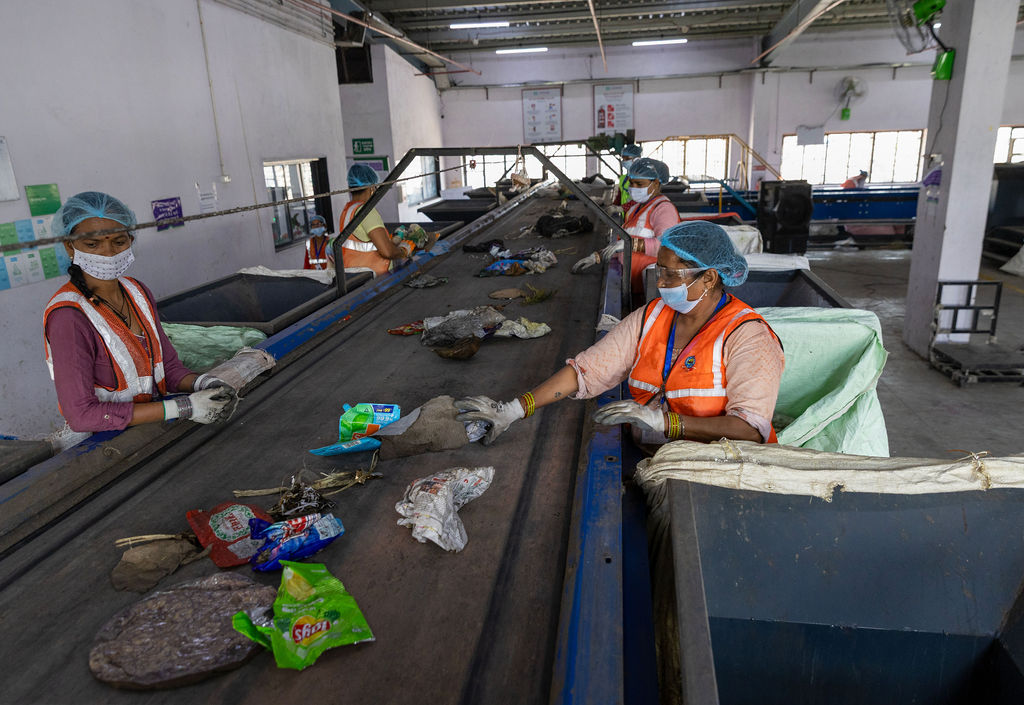
Tackling MSW is a particularly challenging problem due to its heterogeneous composition, which includes organic and inorganic materials, as well as hazardous substances. This complexity makes separation and recycling labour-intensive and costly. Contamination from organic waste further diminishes the recyclability of materials. As a result, much of this waste ends up in landfills, leading to environmental and social challenges.
During the early stages, the Recity team worked closely with local municipalities across various regions in India, including Mathura, to understand the landscape and magnitude of the MSW problem as well as to highlight the MRF’s capabilities. It also needed to identify the most efficient mixed waste processing solution.
Recity’s findings offered clear and vital insights into waste management trends in India. They found that informal waste pickers recover most of the recyclable materials at the collection source, such as households and other collection hotspots, while the rest is landfilled in dumpsites.
Because waste pickers prioritise higher-value plastics such as PET bottles, ParikraM focuses on the remaining MSW stream. It separates lower-value recyclables for recycling and converts non-recyclables into RDF for sale to cement kilns.
The municipality in Mathura then takes on the composting of organic waste. This approach helps to create a more viable and sustainable waste management model.
Currently, Recity’s MRF is running at about 50 per cent of its potential maximum capacity and is expected to process around 300 tonnes of waste per day once the operation stabilises. Through this MRF, about 80 per cent of the city’s daily waste is expected to be diverted and valorised, improving the overall waste management system.
Leveraging tech to optimise waste processing
As a next step, ParikraM is building a data-driven platform, partly funded by the Alliance, to track the entire waste journey, integrating internal workflows into a centralised dashboard. When completed, this will provide real-time insights, improving both operational efficiency and transparency as well as ensuring waste is traceable from source to recovery to make future compliance needs like Extended Producer Responsibility (EPR) easier.
The platform is still in the development phase and is making steady progress. Work is being done to ensure that the platform is operationally and economically efficient.
Empowering Change
The ParikraM project offers valuable lessons and insights for other waste management infrastructure projects.
First, it is vital to develop a strong, flexible working relationship with local authorities. This allowed the project to evolve and adapt to local needs and regulatory frameworks, ensuring long-term sustainability.
A good example was the integration of RDF production capabilities at the MRF, which enabled Recity to develop a product that is already in demand and supported by policymakers. By connecting the dots between waste management infrastructure, market demand, and local economic conditions, waste management firms can develop a project that not only addresses pressing environmental challenges but is also commercially viable and sustainable in the long term.
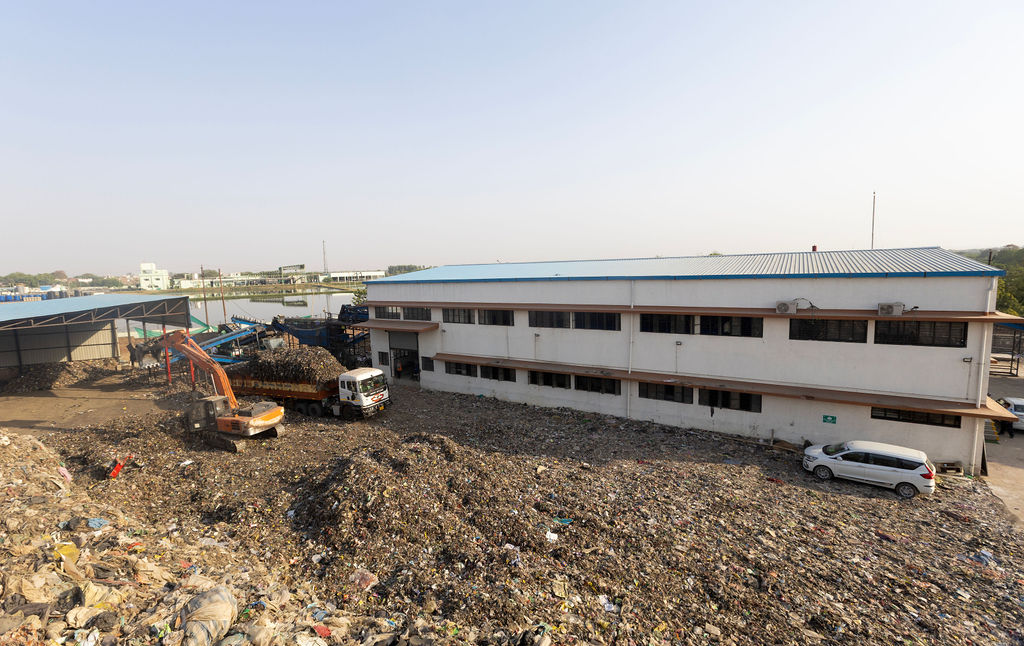
It is also important to co-locate the waste processing facility within the approved waste management zone (landfill in this case). This prevents the odour of waste and other potential pollutants from reaching residential areas. This approach might also drive down costs, as there is no need to invest in additional resources to collect and transport the waste, and the current collection infrastructure could be well integrated.
The initiative’s ripple effects extend beyond the sorting facility. ParikraM demonstrates that sustainability is not merely about managing waste; it’s about redefining value—of resources, communities, and lives. As it matures, the Alliance hopes to see it evolve and scale beyond Mathura.


Stay in the loop
Subscribe to our newsletter for the latest news and updates from the Alliance