Human Rights in Circularity: Putting Inclusion into Practice
Advancing circularity requires attention to both environmental and socioeconomic dimensions, with social inclusion being integral to addressing plastic pollution. The Alliance underscores the importance of social inclusion in enabling circular systems to succeed and endure, ensuring that the people who sustain these systems are recognised, protected, and included.


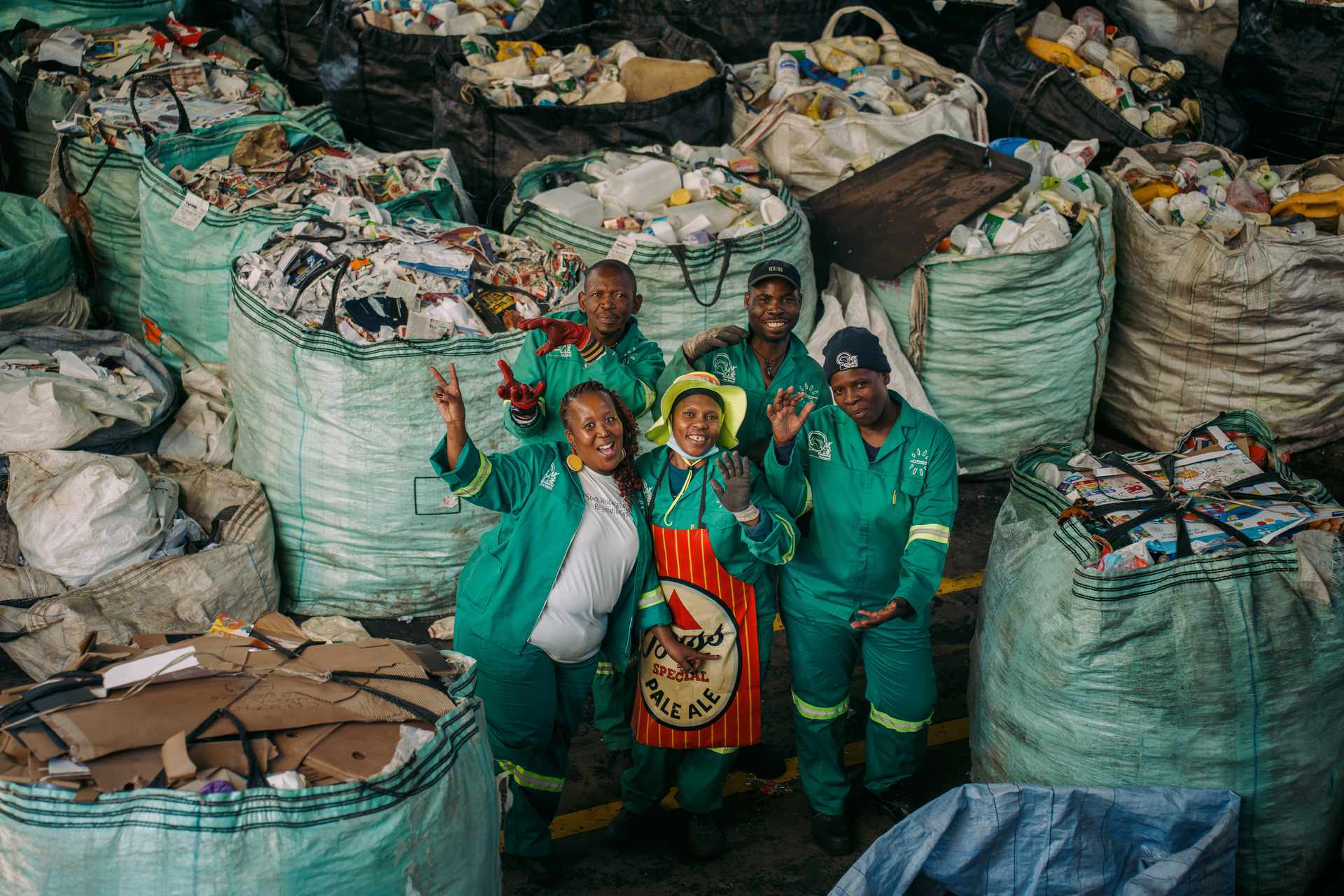
Across many developing economies, circularity commences long before materials reach a sorting facility or recycling plant. It begins with the informal sector comprising waste pickers who collect, separate, and recover materials that would otherwise be discarded from the system. Their contribution is substantial but often invisible. An estimated 20 million people globally work in this informal waste sector, undertaking much of the collection, sorting, and recycling that sustain circular systems. In some countries, these workers enable up to 90 per cent of recycling activity.
Social inclusion is integral to addressing plastic pollution, and advancing circularity requires attention to environmental and socioeconomic dimensions, especially in the communities and to the livelihoods of those that make these systems work. This is particularly important in regions where waste management systems remain underdeveloped, public investment is constrained, and the informal sector continues to form the backbone of collection and recovery systems.
The OECD estimates that between US$1.2 trillion and US$2.1 trillion in investment will be required by 2040 to build waste management systems capable of eliminating environmental leakage of plastic. Yet, waste collection remains the most challenging segment of the value chain. It is the least profitable and most underfunded. Mismanaged plastic waste, whether through open dumping, open burning, or uncontrolled landfills, creates direct risks to public health, livelihoods, and community wellbeing, with the greatest impacts falling on lower-income communities.
In this context, questions of human rights and social inclusion are inseparable from those concerning recycling system design. The transition towards circularity is not simply about improving material flows or increasing recovery rates but about ensuring that the people who sustain these systems are recognised.
Implementation matters as much as intent
The transition from open dumping to circular waste management systems must also be just, one that integrates rather than displaces informal workers, and advances decent work, dignity, and inclusion at scale. The absence of a harmonised, context-sensitive international standard for responsible sourcing in plastic recycling value chains remains a significant impediment, particularly in developing economies where informal workers underpin much of the system.
Commitments to inclusion matter little if they are not reflected in project design, funding decisions, and operational practice. Occupational health and safety, fair and transparent remuneration, access to grievance mechanisms, and opportunities for collective representation should be treated as core features of responsible waste management systems rather than supplementary concerns.
Many existing responsible-sourcing standards have been developed for formal workplaces and do not readily accommodate the realities of informal collection and recycling. A more pragmatic approach is needed, one that supports continuous improvement, reflects different levels of institutional maturity, and recognises of the diversity of waste management systems across countries.
Operationalising social inclusion in decision-making
Social inclusion is most meaningful when it shapes decisions on the ground. The Alliance's Social Impact and Human Rights Framework operationalises this tenet by serving as a due diligence and monitoring instrument that informs funding decisions and is reflected in project agreements across its various geographies.
Recognising that circular systems depend on both, the framework applies to both formal workers and informal reclaimers. For formal workers, this includes wages, contracts, working hours, and occupational health and safety. For informal reclaimers, it encompasses transparent and fair pricing, weighing transparency, access to financial services, and health protection, with particular attention to the disproportionate representation of women within the sector.
The framework also requires verification through confidential third-party interviews with workers and informal collectors, conducted by independent assessors, to ensure that commitments are reflected in practice rather than policy alone. It also requires funding recipients to maintain grievance and remedy mechanisms in local languages, providing accessible pathways for concerns to be raised and addressed.
More broadly, the framework reflects an important principle for circular systems: environmental and socioeconomic outcomes should be considered together rather than in isolation. Fundamentally, the durability of any system depends on material recovery as much as it does on protection of people.
Participation and transparency strengthen circular systems
The effectiveness of any transition depends on the extent to which workers and communities are able to shape it.
Meaningful participation also depends on creating channels through which workers can shape decisions and raise concerns. Waste pickers' cooperatives and other social and solidarity economy entities provide important pathways for collective voice and consultation, beginning from the design stage of policies and projects.
Transparency is equally important. Fair weighing systems, traceable payments, and accessible information contribute directly to trust within collection systems and improve economic security for workers. Grievance mechanisms that operate in local languages and provide clear processes for resolution strengthen accountability. These are not peripheral considerations. They are part of the institutional foundations upon which successful circular systems are built.
A broader socioeconomic perspective is also essential. Plastic products and packaging continue to play important roles in food distribution, healthcare, and sanitation, particularly in developing economies. Changes to markets, regulations, or material choices may therefore have implications that extend well beyond the waste sector itself. A just transition must account for these realities and ensure that the costs of change do not fall disproportionately on those least able to absorb them.
The path to inclusive circularity
The path towards circularity will differ across countries and communities. What should remain constant, however, is the principle that the people who sustain these systems must be recognised, protected, and included in their future development. Circularity is not solely a question of materials management or technological innovation. It is equally a question of whether the systems we build create safer work, stronger livelihoods, and broader opportunities for the communities that depend upon them.
Social inclusion is therefore one of the conditions that allows circular systems to succeed and endure.
Related
.jpg)
Stay in the loop
Subscribe to our newsletter for the latest news and updates from the Alliance